
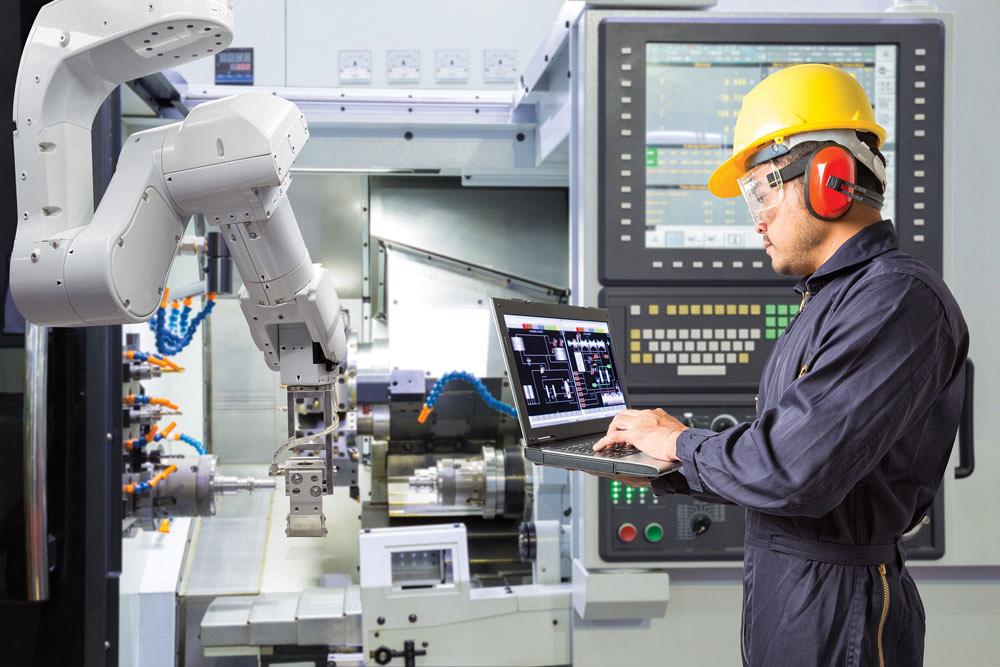

In today’s fast-evolving industrial landscape, the phrase technician productivity carries significant weight. At its core, productivity for technicians encompasses not only the number of tasks completed, but also the quality of those tasks, the time spent on value-added activities, and the ability to respond flexibly to changes. One of the most powerful levers influencing technician productivity is automation—the use of machines, software, robots, and intelligent systems to carry out functions that were previously manual or semi-manual. When applied thoughtfully, automation can dramatically enhance what technicians can achieve, and the impact of automation on technician productivity is multi-faceted: from reducing repetitive work to enabling higher-order problem solving. In this article, we will explore in depth how automation affects technician productivity: what drives the effect, where the gains come from (and where they may not), how organizations should think about implementation and integration, what the challenges are, and how technicians themselves must adapt.
What We Mean by Automation and Technician Productivity
Defining Automation
Automation can take many forms in technician settings—maintenance, repair, assembly, diagnostics, calibration, field service, and more. At its simplest, automation is the substitution of machines or software for what humans previously did, but in modern contexts, it also means augmentation: enabling technicians to do tasks faster, more accurately, or in greater volume. Typical automation elements include:
- Robotic arms or machine tenders that load, unload, sort, inspect, or assemble parts.
- Software automation or digital workflow tools that schedule, guide, log, and report technician work.
- Sensors and IoT systems that monitor equipment health, alert technicians proactively, and automate data capture.
- Collaborative “cobot” systems where human technicians and machines share tasks or interact.
- Augmented reality (AR) and guided assistance systems that speed technician decisions by overlaying instructions or detecting anomalies.
Defining Technician Productivity
Technician productivity isn’t simply about “more tasks done per hour.” It encompasses:
- Labor-output ratio: how much time a technician spends on value-adding work versus non-value or waiting tasks.
- Quality of work: fewer errors, fewer reworks, and correctly done work the first time.
- Flexibility and responsiveness: the ability to respond to unexpected issues or adapt to new tasks without full retraining.
- Utilization of higher-skill time: once routine tasks are automated, technicians can spend more time on diagnostics, optimization, and continuous improvement.
- Safety and ergonomics: less fatigue, fewer repetitive-strain incidents, and lower risk improves overall productivity and reduces downtime.
When we speak of the impact of automation on technician productivity, we refer to how automation changes these dimensions—how it shifts technician roles, alters output, improves quality, enhances flexibility, and boosts overall workforce effectiveness.
Why Automation Boosts Technician Productivity: Key Mechanisms
Reducing the Burden of Repetitive, Low-Value Tasks
One of the clearest productivity gains from automation comes when it removes or mitigates tedious, repetitive work that would otherwise consume technician time. In many service, maintenance, or manufacturing contexts, technicians spend substantial time on parts retrieval, manual data entry, routine inspections, and responding to alerts that could be filtered. By automating these, the technician’s time is freed for higher-value activities. Studies have shown that 65% of workers feel less stressed and more productive when repetitive tasks are automated.
Improving Task Accuracy and Reducing Error/Rework
When repetitive tasks are automated, the consistency and precision of those tasks improve. Automated inspection systems can detect defects faster and more reliably than manual checks, or robots can perform precise operations that would otherwise be slow or error-prone. Reducing errors means fewer reworks, less wasted technician hours, and more first-time-right work—clearly improving productivity.
Enhancing Technician Decision-Making Through Data
Modern automation doesn’t simply replace manual labor—it augments it with real-time data and analytics. For example, IoT sensors can track machine performance and send alerts before breakdowns occur. Predictive maintenance allows technicians to intervene before equipment failure, shifting their role from reactive problem-solvers to proactive planners. This transformation enhances uptime and system reliability, which directly correlates to higher productivity.
Enabling Higher-Value Technician Activities
By automating routine or repetitive tasks, technicians can focus on strategic, analytic, and skill-intensive responsibilities such as root-cause analysis, process improvement, and system optimization. Automation multiplies technician value by giving them the bandwidth to tackle complex problems instead of mundane ones.
Faster Throughput and Operational Flow
Automation improves throughput by streamlining workflows. Technicians spend less idle time waiting for setups, data collection, or approval processes. Automated scheduling and job assignment systems ensure that each technician’s time is used efficiently, eliminating bottlenecks and idle periods. The result is faster service completion and improved customer satisfaction.
Evidence from Research: What the Numbers Show
Studies show that companies adopting automation experience productivity increases of 20–30%. Reports also indicate that nearly 45% of current activities across industries can be automated using existing technology, illustrating massive potential for further efficiency gains. In manufacturing environments, robotics integration has been shown to improve task efficiency, consistency, and safety simultaneously—factors that collectively drive technician productivity upward.
However, automation can also reshape job structures. For instance, while productivity increases, certain low-skill roles may be displaced. This is why it’s critical to pair automation initiatives with technician upskilling and role redesign to ensure both workforce continuity and long-term productivity benefits.
The Role of Upskilling and Adaptability
Automation creates new demands on technicians. As machines and software take over manual tasks, the technician’s role evolves toward monitoring, diagnostics, system programming, and interpretation of data. Therefore, continuous learning becomes essential. Organizations that invest in upskilling programs see the greatest returns on automation investments, as their technicians are equipped to manage advanced systems and adapt to new technologies rapidly.
Key areas of focus include:
- Learning data interpretation and digital system integration.
- Understanding robotic programming and maintenance.
- Improving troubleshooting through data-driven insights.
- Enhancing collaboration between human and machine systems.
Upskilled technicians are not only more productive individually but also contribute to higher overall operational efficiency by reducing reliance on external support or downtime.
Challenges and Limitations of Automation in Technician Work
While automation brings clear benefits, there are also challenges that organizations must address:
- High upfront costs: Implementing automated systems often requires significant investment in equipment, integration, and training.
- Transition friction: During implementation, workflows can be disrupted, and productivity might temporarily dip.
- Overdependence on technology: Excessive reliance on automation can reduce technician situational awareness and critical thinking.
- Maintenance complexity: Automated systems require specialized maintenance, which can offset some productivity gains if not managed well.
- Change resistance: Technicians accustomed to manual processes may initially resist automation until its benefits become clear.
Addressing these challenges requires careful planning, change management, and involving technicians early in the automation process to ensure alignment and acceptance.
Real-World Applications of Automation on Technician Productivity
Automation has already transformed several industries where technician roles are vital:
- Manufacturing: Cobots and robotic cells enhance assembly speed and precision.
- HVAC and field service: Technicians use automated scheduling and remote diagnostics to improve service turnaround times.
- Automotive maintenance: Diagnostic software automates troubleshooting, reducing inspection time and improving accuracy.
- Telecommunications: Automated testing and network monitoring free technicians from constant manual checks.
- Energy and utilities: Predictive maintenance and automated monitoring systems reduce field failures and service interruptions.
In each of these cases, automation amplifies technician output and accuracy, enabling them to achieve more in less time without compromising quality.
How Organizations Can Maximize Automation Benefits
To fully harness automation’s productivity potential, organizations should:
- Conduct workflow audits to identify automation-ready processes.
- Involve technicians in automation design to ensure practical integration.
- Invest in continuous upskilling and certification programs.
- Implement hybrid systems combining human judgment and automated precision.
- Measure productivity not just by speed but by quality and reliability metrics.
By aligning automation initiatives with workforce capability and operational goals, companies can achieve sustainable productivity growth rather than short-lived efficiency spikes.
FAQ
Q1: Will automation eliminate technician jobs?
Not entirely. Automation shifts technician roles rather than replaces them. While repetitive tasks are automated, technicians gain more responsibility for managing systems, interpreting data, and optimizing processes.
Q2: How does automation affect technician safety?
Automation significantly improves safety by removing technicians from hazardous or repetitive environments, lowering the risk of accidents and fatigue-related errors.
Q3: What skills are most important for technicians in automated environments?
Digital literacy, system integration, data interpretation, and problem-solving are critical. As automation grows, technicians must combine technical and analytical skills to remain productive.
Q4: Can automation improve service quality along with productivity?
Yes, by reducing human error, improving consistency, and enabling predictive maintenance, automation enhances both the speed and reliability of technician service.
Q5: How can small organizations implement automation affordably?
Start with scalable solutions such as workflow software, data collection sensors, or task scheduling automation. Gradual implementation allows small teams to experience productivity benefits without massive upfront costs.
Automation is no longer a distant innovation—it’s a daily tool that reshapes technician productivity in profound ways. When integrated intelligently, it transforms technicians into empowered problem-solvers who work smarter, faster, and safer.

Comments are closed.